Mechanical seal thermal damage occurs when heat generation, heat removal, or temperature change pushes the sealing interface outside a stable operating condition. High process temperature is only one possible source. Face friction, poor lubrication, vaporization, excessive loading, blocked circulation, speed, and seal diameter can also raise local temperature.
The important question is not simply whether the pump is “hot.” Technicians should identify the heat source, check whether the lubricating film remains stable, and compare physical evidence with the operating history before assigning a root cause.
A Practical Thermal-Damage Diagnosis
- Record when leakage or temperature change began.
- Check process temperature, seal-chamber pressure, speed, startup, shutdown, and cleaning history.
- Confirm whether the seal faces remained lubricated.
- Inspect flush, cooling, quench, or circulation systems.
- Inspect faces, elastomers, springs, sleeves, and nearby components before cleaning them.
- Compare possible heat evidence with mechanical causes such as runout, vibration, wrong working length, or excessive face loading.
- Correct the heat-generation or heat-removal problem before installing another seal.
What Is Mechanical Seal Thermal Damage?
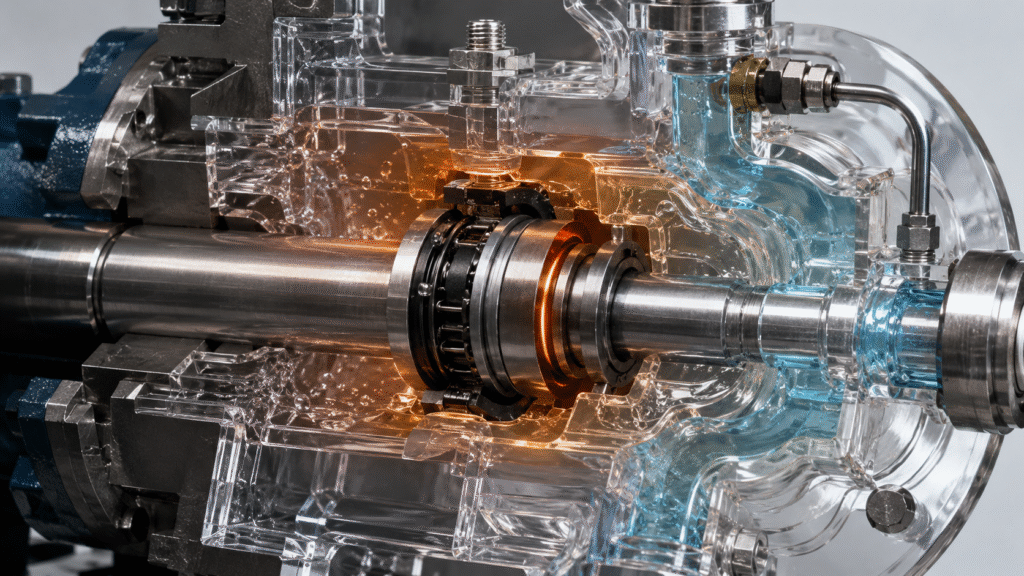
A conventional wet-running mechanical seal depends on a very thin fluid film between the rotating and stationary faces. That film supports lubrication and heat transfer. A useful explanation of the lubrication film in mechanical seals helps show why local face conditions can matter more than bulk pump temperature.
Thermal damage can develop when heat is generated faster than it is removed, when the liquid film becomes unstable, or when components experience damaging temperature change. It may affect seal faces, elastomers, metal parts, and surrounding pump components.
Common Causes of Mechanical Seal Thermal Damage
Dry Running or Poor Lubrication
Loss of liquid at the faces can cause temperature to rise rapidly because sliding contact continues without a stable lubricating film. A seal may also overheat before it becomes completely dry if the film is weak, intermittent, or near vaporization.
The guide on what happens when a mechanical seal runs dry covers dry-running mechanisms in more detail.
Vaporization and Unstable Fluid Film
Hot or volatile liquids can approach vapor conditions at the seal faces. Pressure drop, local heating, low viscosity, or poor circulation can destabilize the film. The result may be intermittent contact, increased friction, and repeated thermal cycling.
Excessive Face Loading
Incorrect working length, excessive spring compression, hydraulic loading, or a wrong seal configuration can increase face contact pressure. Higher face loading can increase frictional heat and reduce the ability of the liquid film to remain stable.
High Sliding Speed
Shaft speed and effective face diameter influence sliding velocity. Higher sliding velocity can increase heat generation, especially when lubrication, cooling, or face loading is already unfavorable.
Poor Flush, Cooling, or Circulation
A blocked line, closed valve, wrong flow direction, dirty cooler, insufficient circulation, lost cooling water, or incorrect commissioning can remove needed heat-control functions.
The API 682 seal flush plans guide explains Plan 11, Plan 21, and Plan 23 separately. This article focuses on the thermal consequence of inadequate circulation.
High Process Temperature
High process temperature reduces the margin for removing seal-generated heat. It can also change viscosity, vapor pressure, elastomer behavior, and chemical reaction rates. Material limits and support-system capability should therefore be checked at the actual seal-chamber condition.
Temperature Cycling
Frequent hot and cold cycles can expose faces and secondary seals to repeated expansion and contraction. Startup, shutdown, batch changes, cleaning cycles, and alternating process temperatures may contribute to thermal fatigue or elastomer aging.
Temperature cycling alone does not prove a failure cause. Rate of change, material combination, geometry, lubrication state, and mechanical restraint all influence the result.
How to Recognize Possible Thermal Damage
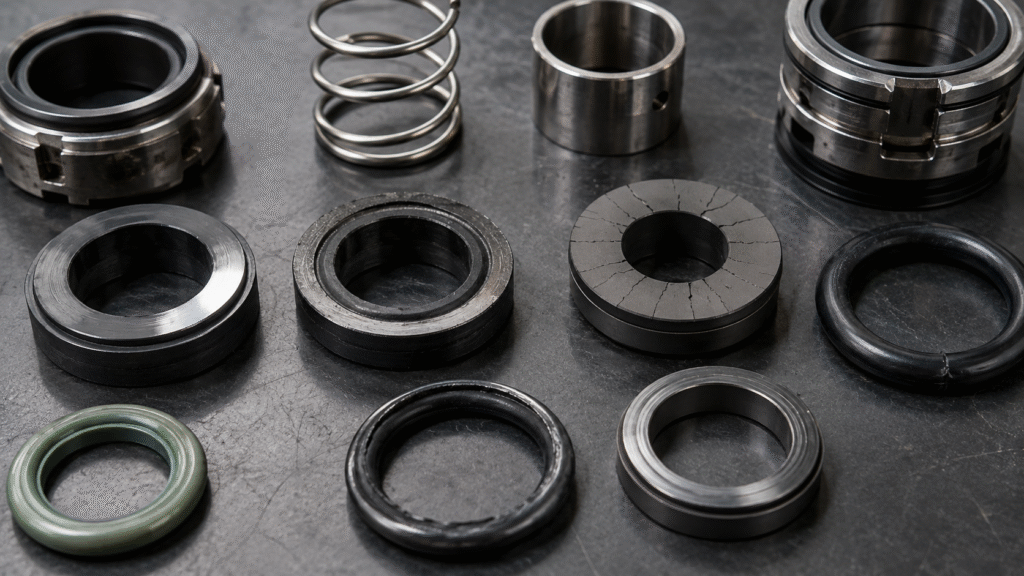
Inspection should combine physical evidence with operating history and process conditions. No single visual symptom proves overheating.
| Observed Condition | Possible Thermal Explanation | Other Causes to Check |
|---|---|---|
| Glazed or polished carbon | High friction or weak lubrication | Normal wear pattern, wrong face loading, contamination |
| Radial or fine face cracking | Thermal shock or severe temperature gradient | Impact, installation damage, material defect |
| Hard or cracked elastomer | Heat aging or chemical/thermal attack | Oxidation, wrong compound, long service |
| Flattened elastomer | High temperature and compression set | Long compression time, wrong groove or compound |
| Uneven face wear | Local heating and unstable contact | Runout, misalignment, distortion, vibration |
| Deposits or discoloration | Local boiling, oxidation, or hot deposits | Process chemistry, contamination, cleaning residue |
Elastomer heat-aging behavior should be considered together with the actual fluid and compound.
Separate Thermal Damage From Mechanical Failure
Dark faces, cracked rings, or hardened O-rings can appear after several different failure mechanisms. Check shaft runout, bearings, alignment, vibration, cavitation, working length, spring compression, and installation before concluding that temperature is the only cause.
The broader mechanical seal failure guide covers mechanical and installation-related causes that can produce similar evidence.
How to Prevent Repeat Thermal Damage
- Maintain a stable liquid supply at the faces.
- Verify priming and venting before continuous operation.
- Confirm working length, spring compression, and seal setting.
- Check seal-chamber pressure and vapor margin.
- Keep flush, cooling, quench, barrier, or oil systems in the specified condition.
- Clean blocked lines, coolers, and restrictions where applicable.
- Use face and elastomer materials suitable for the real temperature and chemistry.
- Correct runout, bearing wear, vibration, or misalignment before fitting another seal.
- Monitor startup and process changes when temperature trends are useful for the site procedure.
The mechanical seal materials guide explains face-material behavior, while the mechanical seal material selection guide covers complete application conditions.
Mechanical Seal Thermal Damage FAQ
Is Silicon Carbide the Best Material for High Temperature?
Not automatically. Silicon carbide offers useful thermal conductivity and wear characteristics, but selection still depends on fluid lubricity, chemistry, mating face, solids, face loading, and seal geometry.
Can a Mechanical Seal Overheat Without Dry Running?
Yes. A seal can retain some liquid film yet still run too hot because of excessive face loading, poor circulation, vapor instability, high process temperature, high sliding speed, or restricted cooling.
Should Temperature Be Monitored During Startup?
When appropriate for the pump and site procedure, temperature trends can be useful together with leakage, vibration, pressure, and support-system condition. Compare trends with normal operating behavior rather than one universal time limit.
Mechanical seal thermal damage develops when heat generation, lubrication, material behavior, and heat removal fall out of balance. Prevent repeat damage by correcting the thermal mechanism rather than simply fitting a harder face.