A reliable Wilo mechanical seal replacement starts with the exact pump identity, not the Wilo name alone. “Wilo pump,” “Wilo PH,” or “Wilo centrifugal pump” usually does not identify one replacement seal. Different pump versions can use different seal constructions, dimensions, materials, or service kits.
The practical sequence is simple: identify the pump, verify the installed seal, confirm critical dimensions, compare the replacement, and then follow the service instructions for that exact model. This guide focuses on Wilo-specific identification and replacement decisions rather than replacing a full pump overhaul manual.
If you already know the required seal reference and want to browse available products, see our Wilo pump mechanical seals.
Wilo Mechanical Seal Replacement Workflow
- Record the complete pump model, article number, serial number, production code, motor rating, and speed.
- Document the old seal arrangement and any service-kit reference before dismantling.
- Confirm the shaft or sleeve, stationary seat, working length, and other critical dimensions.
- Check whether the pump has been modified during previous repairs.
- Compare the old and new seal construction, materials, orientation, and kit contents.
- Inspect shaft, sleeve, seat bore, bearings, and surrounding components.
- Install the verified seal using the model-specific Wilo procedure.
- Reassemble, prime, vent, and commission according to the applicable Wilo manual.
Start With the Exact Wilo Pump Identification
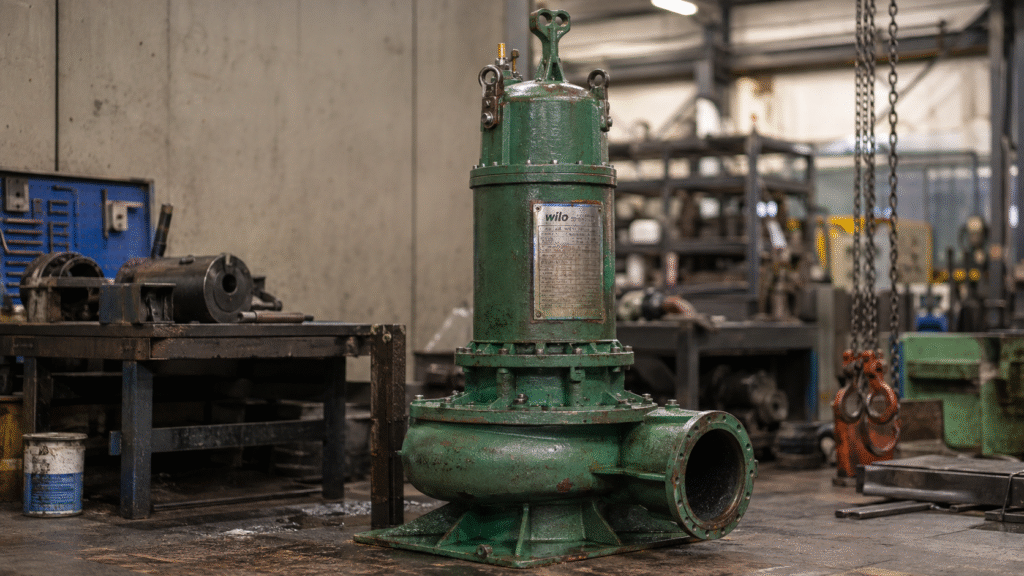
Photograph the complete pump nameplate before ordering or dismantling the seal. Record the full model, Wilo article or product number, serial number, production date or code, motor rating, and speed. Also record any service-kit or mechanical-seal reference shown in reliable maintenance documents.
Do not shorten the identity to a broad family name. In-line, end-suction, multistage, drainage, and sewage pumps can use different seal arrangements and service procedures. Production revisions may also change compatible spare parts.
Why the Wilo Article Number Matters
The Wilo article number can provide a more precise starting point than a series description. Official Wilo product information can connect an article number to technical data, documents, and spare-part information.
Never infer an article number from a visually similar pump. Use only the actual nameplate, Wilo records, or reliable service documents. Serial and production information remain important because older and newer versions may not share every service component.
Identify the Existing Mechanical Seal or Service Kit
If an original seal reference is available, record it before dismantling. Photograph the seal arrangement, spring or bellows design, stationary seat, rotating unit, orientation, face materials, and visible elastomers.
When Wilo documentation lists a service kit, confirm what the kit actually contains. A kit may include the mechanical seal plus O-rings, gaskets, washers, shims, or other service parts. State whether the quotation should cover the seal only, associated static parts, or the complete service kit.
Which Dimensions Should You Confirm?
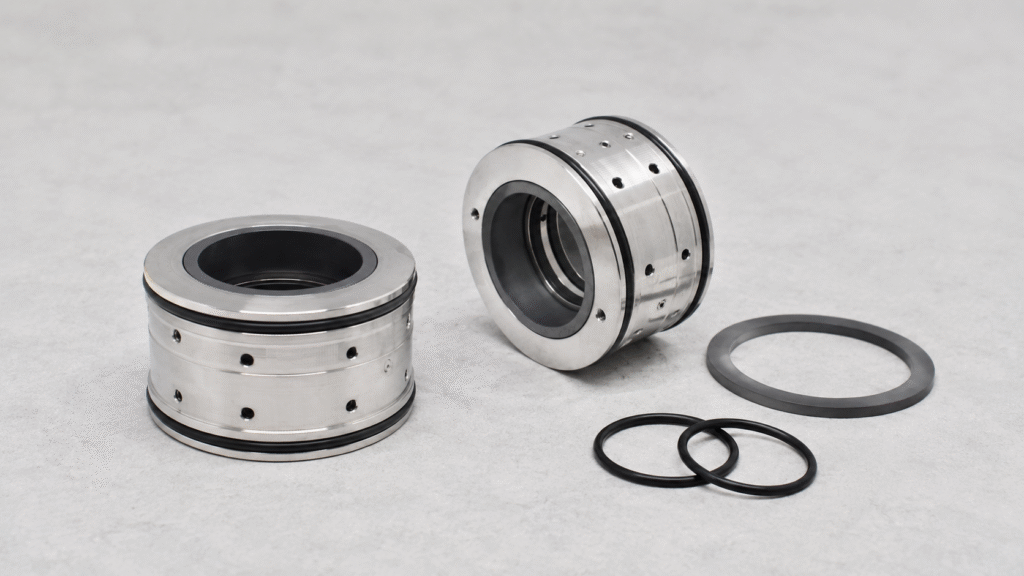
Dimensions should verify the identification rather than replace it. Confirm the shaft or sleeve diameter, rotating-unit dimensions, stationary-seat dimensions, and installed working length. Where relevant, also check gland, cartridge, or locating dimensions that control seal position.
Two seals may share one shaft diameter yet use different seat profiles, working lengths, springs, bellows, or installation orientation. Appearance alone is even less reliable when old elastomers are swollen or metal parts are worn.
For a complete measuring procedure, use the How to Measure a Mechanical Seal guide.
Check Whether the Pump Has Been Modified
A pump in long-term service may no longer match its original configuration. Previous repairs can introduce an aftermarket seal, modified shaft sleeve, converted gland, custom spacer, mixed service-kit parts, or another production-version component.
Look for unexpected spacers, sleeves, machining marks, altered glands, nonstandard fasteners, or dimensions that conflict with the documentation. When evidence conflicts, compare the article number, serial or production data, installed seal, dimensions, and actual pump assembly before ordering.
Verify the Replacement Seal Before Installation
Place the old and new assemblies side by side. Confirm the pump identity, replacement drawing, shaft diameter, stationary-seat profile, working length, face and elastomer materials, spring or bellows design, orientation, and every service-kit component that affects axial position or static sealing.
The new seal should match the required construction, not merely the overall appearance. Check whether the stationary seat enters the correct bore, the rotating element locates at the intended position, and directional components face the correct way.
If the material combination changes, review the fluid, temperature, pressure, solids, and chemistry first. The Mechanical Seal Material Selection guide covers that decision in more detail.
General Wilo Mechanical Seal Service Workflow
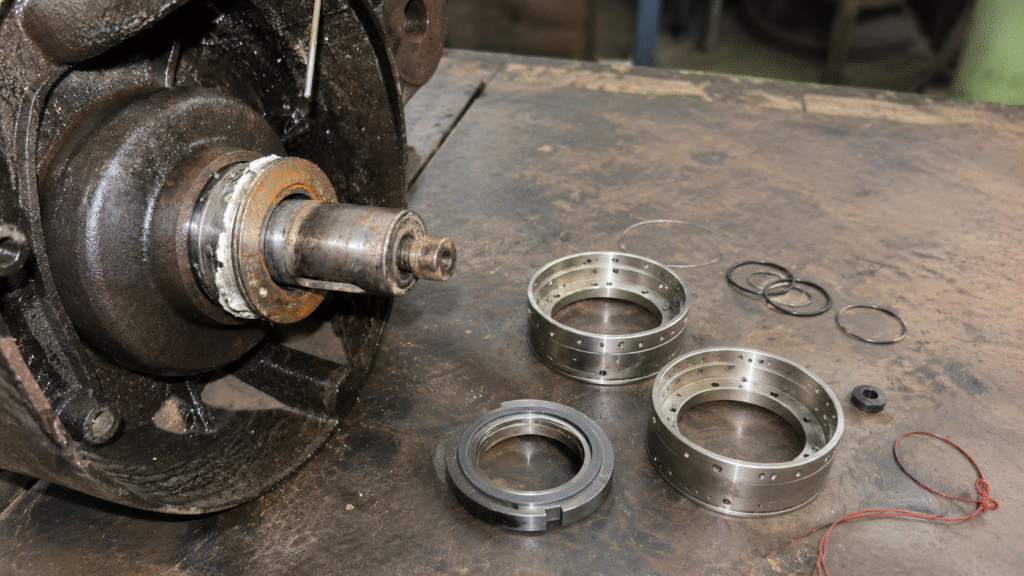
The following is a general workflow for qualified maintenance personnel. Exact dismantling, impeller removal, torque values, clearances, lubricants, and assembly sequences must come from the service documentation for the exact Wilo pump model and version.
- Identify and isolate the exact pump. Control electrical energy, pressure, temperature, and hazardous fluid according to site and manufacturer procedures.
- Record the existing assembly. Photograph the nameplate, seal position, gland or cover, spring direction, spacers, and related parts.
- Remove the old seal according to the model-specific instructions. Do not assume every Wilo pump opens or releases the impeller the same way.
- Inspect the shaft, sleeve, seat bore, and bearings. Repair damage that could prevent the replacement from operating correctly.
- Compare old and new seals. Recheck geometry, working length, materials, orientation, and kit contents.
- Install the seal according to its design and the Wilo procedure. Use only compatible lubricant where permitted.
- Reassemble the pump to model-specific requirements. Use documented torque, clearances, spacers, and component sequence.
- Prime, vent, and commission according to the Wilo manual. Confirm correct rotation, liquid supply, and normal operating condition.
Use the Mechanical Seal Installation Guide for general face handling, O-rings, working length, and component or cartridge principles. The exact Wilo instructions control model-specific assembly.
Component, Cartridge, and Submersible Wilo Seals
Seal construction must match the original pump arrangement. A component seal uses separate stationary and rotating parts, while a cartridge assembly can use different locating and installation logic. Do not transfer one installation procedure to another construction without checking the instructions.
Submersible and sewage applications require additional caution. Selected Wilo EMU-type or other submersible pumps may use upper and lower seals, an oil chamber, or another double-seal arrangement. The seal positions can have different functions, materials, and service procedures.
Do not copy a dry-installed centrifugal-pump procedure directly to a submersible pump. Oil quantity, lubricant specification, seal position, and fill procedure should come from the exact Wilo model documentation.
Common Wilo Pump Seal Replacement Mistakes
- Ordering from “Wilo,” “PH,” or another broad family name
- Matching only by shaft diameter
- Ignoring article, serial, or production information
- Assuming the installed seal is still the original factory configuration
- Treating every service kit as one mechanical seal
- Using a similar-looking stationary seat with the wrong profile
- Changing face or elastomer materials without reviewing the application
- Reusing generic torque, oil quantity, or service steps from another Wilo pump
What If the New Seal Leaks Again?
Repeated leakage should trigger a root-cause check rather than another automatic seal change. Review bearing wear, shaft runout, misalignment, dry running, cavitation, solids, chemical incompatibility, wrong working length, installation, priming, and pump assembly.
A replacement seal cannot correct a damaged pump or unstable operating condition. If leakage begins immediately after service, recheck the seat installation, orientation, working length, kit components, and the exact model-specific assembly steps before blaming the material.
Information to Send Before Ordering a Wilo Replacement Seal
- Complete Wilo pump model
- Article or product number
- Serial number and production date or code
- Motor rating and speed
- Existing service-kit or mechanical-seal reference
- Clear nameplate photograph
- Photos of the complete old seal, rotating unit, stationary seat, and spring or bellows arrangement
- Shaft or sleeve diameter
- Stationary-seat dimensions
- Working length
- Pumped fluid, temperature, pressure, and solids
- Required quantity
- Required purchasing scope: mechanical seal only or complete service kit
Wilo trademarks and pump model names are used for compatibility identification. Hong Teng replacement seals are independently manufactured replacement parts unless supporting supply records document otherwise.
Wilo Mechanical Seal Replacement FAQ
Can I Order the Correct Part From the Pump Series Name Alone?
Usually not. A broad series can include several sizes, revisions, shaft dimensions, and seal constructions. Use the article number, serial or production data, complete model, old seal, and critical dimensions.
Is the Article Number More Important Than Shaft Diameter?
It is often a stronger starting point because it identifies the product more precisely, but final verification should still compare the existing seal, stationary seat, working length, materials, and current pump configuration.
Is a Service Kit the Same as a Mechanical Seal?
Not always. A kit may contain the mechanical seal plus O-rings, gaskets, washers, shims, or other service parts. Confirm the kit contents before comparing quotations.
Can I Use the Same Procedure for a Submersible Pump?
Not automatically. A submersible pump may use upper and lower seals, an oil chamber, or another arrangement that differs from a dry-installed centrifugal pump. Follow the exact model documentation.
A dependable Wilo mechanical seal replacement begins with identification and ends with model-specific verification. Record the pump identity, article and serial information, existing seal, service-kit reference, and critical dimensions before selecting a replacement, then follow the exact Wilo service documentation for assembly and commissioning.